
OCTOPUS FREEDIVING - Yellow Bottom Plate
The most hydrodynamic Bottom Plate on the market
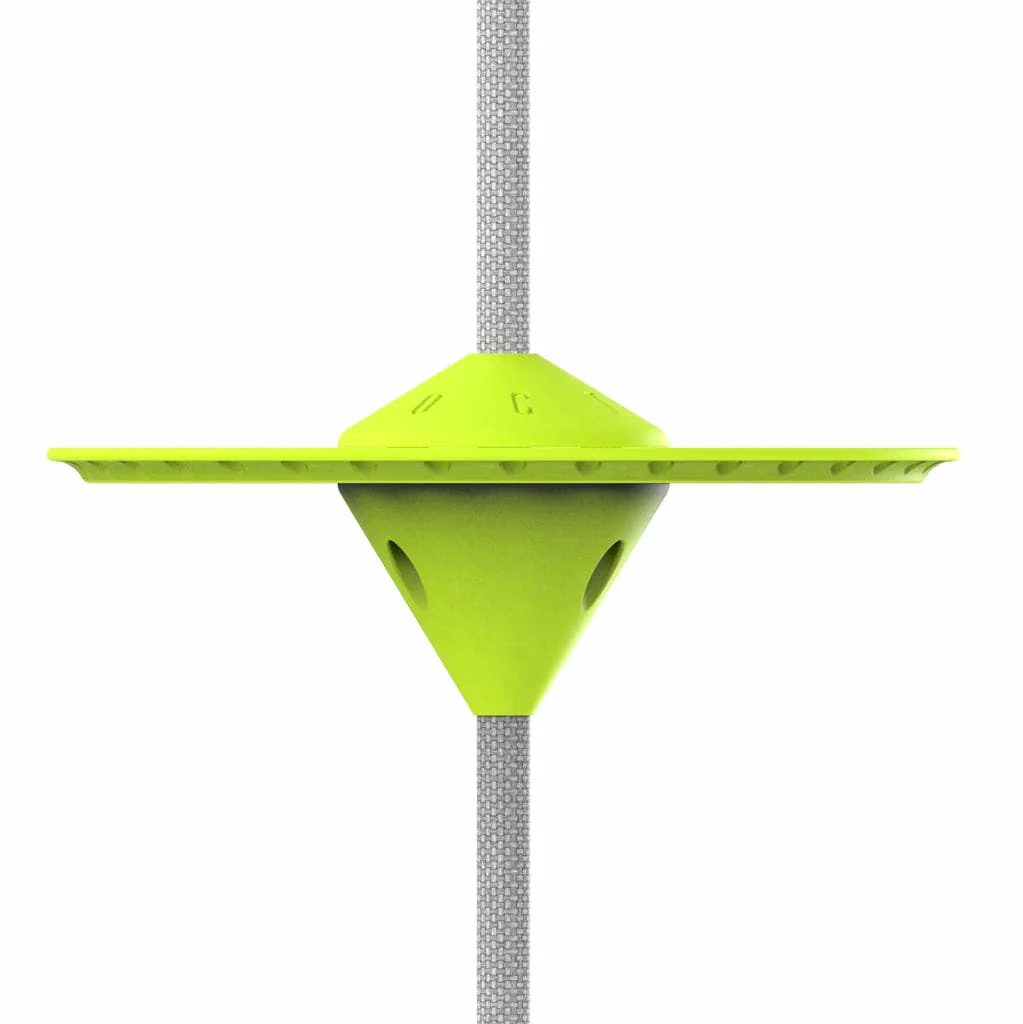
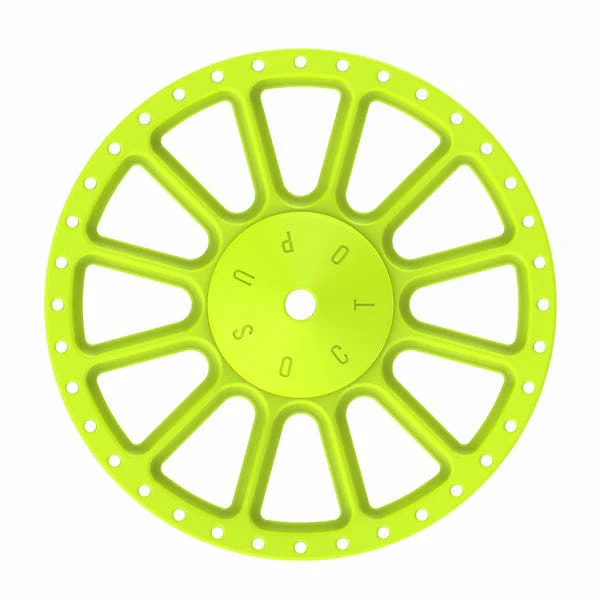
• Hydrodynamic shape to drastically reduce drag while pulling the plate up thanks to its compact shape and wide holes
• Ø 21cm, yellow fluo plate for a great visibility underwater
• Quick and robust mounting system (3 Phillips 316 stainless steel screws)
• Weight: 140 grams
• Material: ultra robust ABS (thermoplastic polymer, same as our line stopper)
Why is it better to train with a bottom plate? Get used to grabbing a tag during some of your training sessions. It will help you reduce the « tag stress » during your competitions by making this step « almost » automatic.
It works perfectly with a 10 to 12mm rope. It is possible to use it with smaller ropes down to 8mm.
Regarding the mounting process, the bottom plate is divided in 3 parts. A plate and a center structure (identical to our safety stopper). A simple knot is placed in its center, and 3 stainless steel screws (standard cross-head) make it easy to finish putting it in place. It is made out of ABS, a strong plastic used for example to make LEGOs: after all, we are just big kids playing in the water!
Designed and tested by Swiss record holder Pascal Berger (-131m VWT ).
Original: $39.95
-65%$39.95
$13.98More Images

OCTOPUS FREEDIVING - Yellow Bottom Plate
The most hydrodynamic Bottom Plate on the market
• Hydrodynamic shape to drastically reduce drag while pulling the plate up thanks to its compact shape and wide holes
• Ø 21cm, yellow fluo plate for a great visibility underwater
• Quick and robust mounting system (3 Phillips 316 stainless steel screws)
• Weight: 140 grams
• Material: ultra robust ABS (thermoplastic polymer, same as our line stopper)
Why is it better to train with a bottom plate? Get used to grabbing a tag during some of your training sessions. It will help you reduce the « tag stress » during your competitions by making this step « almost » automatic.
It works perfectly with a 10 to 12mm rope. It is possible to use it with smaller ropes down to 8mm.
Regarding the mounting process, the bottom plate is divided in 3 parts. A plate and a center structure (identical to our safety stopper). A simple knot is placed in its center, and 3 stainless steel screws (standard cross-head) make it easy to finish putting it in place. It is made out of ABS, a strong plastic used for example to make LEGOs: after all, we are just big kids playing in the water!
Designed and tested by Swiss record holder Pascal Berger (-131m VWT ).
Product Information
Product Information
Shipping & Returns
Shipping & Returns
Description
The most hydrodynamic Bottom Plate on the market
• Hydrodynamic shape to drastically reduce drag while pulling the plate up thanks to its compact shape and wide holes
• Ø 21cm, yellow fluo plate for a great visibility underwater
• Quick and robust mounting system (3 Phillips 316 stainless steel screws)
• Weight: 140 grams
• Material: ultra robust ABS (thermoplastic polymer, same as our line stopper)
Why is it better to train with a bottom plate? Get used to grabbing a tag during some of your training sessions. It will help you reduce the « tag stress » during your competitions by making this step « almost » automatic.
It works perfectly with a 10 to 12mm rope. It is possible to use it with smaller ropes down to 8mm.
Regarding the mounting process, the bottom plate is divided in 3 parts. A plate and a center structure (identical to our safety stopper). A simple knot is placed in its center, and 3 stainless steel screws (standard cross-head) make it easy to finish putting it in place. It is made out of ABS, a strong plastic used for example to make LEGOs: after all, we are just big kids playing in the water!
Designed and tested by Swiss record holder Pascal Berger (-131m VWT ).